One of the most dangerous aspects of modern society today is the tendency to view everything through a political lens.
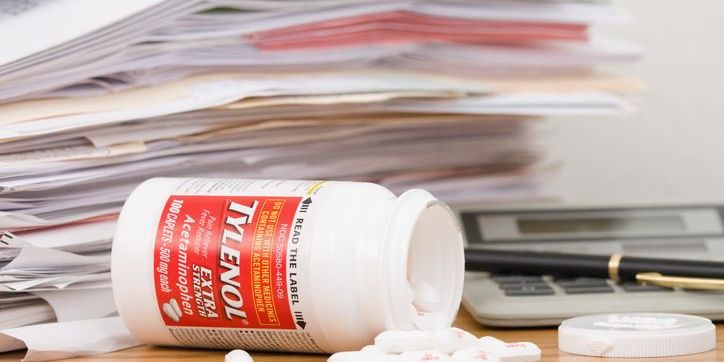
Take the recent announcement from US President Donald Trump that Tylenol – acetaminophen or paracetamol to the rest of the world – is behind the alarming rise in autism around the world.
Immediately, I noticed, the press and the public divided along party lines. From the get-go, here in the UK, where I live, broadcasters of the main stations, which tend to be more leftwing, pronounced his comments as ‘false,’ ‘dangerous’ and ‘alarmist’ allegations, without really examining the evidence. Trump had said it, so it had to be wrong. The National Health Service said it was safe, and that was good enough for them.
The medical community quickly weighed in as well. Mel Merritt, head of policy at the UK’s National Autistic Society, called Trump’s comments ‘the worst myths of recent decades,’ ‘dangerous pseudo-science’ that is putting ‘pregnant women and children at risk and devaluing autistic people.’
Those disparaging the warnings pointed to a major study by the Karolinska Institute in Sweden, published a year ago, which tracked nearly two and a half million children and their siblings born between 1995 and 2019. Of those, just 7.5 percent of the total had been exposed to acetaminophen/paracetamol while in their mother’s wombs.
Nevertheless, the rates of autism and ADHD did not significantly differ between those exposed to the drugs or not, wrote the researchers (JAMA, 2024;331(14):1205-1214). According to scientists, the press and the medical societies, that study should have closed the argument.
As Steven J. Fleischman, president of the American College of Obstetricians and Gynecologists (ACOG), argued, ‘In more than two decades of research on the use of acetaminophen in pregnancy, not a single reputable study has successfully concluded that the use of acetaminophen in any trimester of pregnancy causes neurodevelopmental disorders in children.’
Well, not quite. Just two days after the President’s announcement, a Harvard study was published, claiming that the Swedish study had major flaws. For one thing, it had relied not on recordings of actual drug usage but on the simple say-so of midwives caring for the women.
Furthermore, the 7.5 percent figure as the percentage of drug-taking women was extraordinarily low – up to six times lower than many other studies showing that an average of 40-50 percent of women took the drug while pregnant. In their evaluation Swedish researchers may have missed five out of six, or 83 percent, of pregnant drug takers (BMC Environ Health, 2025; 24: 56).
After re-analyzing 46 other studies researching a possible link between autism and paracetamol usages, Harvard scientists found that 27 – more than half – had discovered a significant connection. Only four of the 46, including the Karolinska study, found no association.
The Harvard research was undoubtedly how President Trump suddenly got interested. The lead researcher of the study is one Andrea Baccarelli, dean of the faculty at Harvard’s T.H. Chan School of Public Health and professor of environmental health, who had been chatting with health secretary Robert F. Kennedy Jr. a few weeks before Trump’s announcement. He’d then gone on to provide the White House team with evidence of an association between prenatal exposure to acetaminophen and neurodevelopmental disorders.
“That association is strongest when acetaminophen is taken for four weeks or longer,” said Baccarelli.
It should be noted that by his own admission Baccarelli was paid some $150,000 to be an expert witness in an unsuccessful class action suit that had been brought by a group of parents claiming that their children’s ADHD and autism had resulted from their mothers taking the painkiller while pregnant, a case dismissed by a federal judge as ‘unbalanced.’ Trump has also referred to him as ‘my favorite scientist.’
But even if his involvement could be construed as biased, other institutions, such as the California Institute of Behavioral Neurosciences & Psychology, which reviewed some 16 ‘high qualities’ studies, agreed with Harvard’s conclusion. They also found a ‘strong association’ between the offspring of mothers who took the painkiller and neurodevelopmental problems in their children, an effect that intensified the longer the drug was taken and the higher the dosage (Cureus, 2022; 14: e26995).
In its own study of nearly 74,000 women, the Barcelona Institute for Global Health put the risk of offspring of mothers taking the drug during pregnancy developing autism at 21 percent (Eur J Epidemiol, 2021 Oct;36(10):993-1004).
And the effects may not simply be caused by exposure in the womb. Researchers at New Jersey’s Ronin Institute discovered increases in autism in children taking acetaminophen in their first few years of life. (Acetaminophen/paracetamol makes up 20 percent of the children’s medication Calpol.) In fact, the institute estimated that the drug could be responsible for up to 40 percent of all cases of autism, particularly in boys (Behav Sci (Basel). 2020 Jan 1;10(1):26).
Why would this well known and so-called well tolerated drug cause brain damage in fetuses and young children? As scientists have long known, acetaminophen lowers levels of glutathione, which is central to neurodevelopment because it is necessary for brain cell communication and protects neurons from oxidative stress.
So does this drug cause autism? Many associations are there, without hard and fast proof. But the point is, that this is not a political issue, not something to be determined by whether you are a Republican or a Democrat – it’s a health issue.
Doctors advise pregnant women that a high fever during pregnancy (one higher than 99.5º F./37.5ºC) may cause damage to a growing fetus, but there are many other ways to treat it without drugs.
When it comes to pregnancy, we’ve forgotten the lessons of thalidomide, the drug for morning sickness, and diethylstilbesterol, the drug to prevent miscarriages. Both were considered perfectly safe and both caused major damage in offspring.
While Democrats and Republicans duke it out over Tylenol, if you’re pregnant or have small children, it’s wise to adopt the precautionary principle: assume that every pharmaceutical drug is potentially dangerous (unless absolutely necessary to the mother’s or baby’s survival) and opt for a non-drug alternative.
Look to one of the many tried and tested methods of taking down a fever or ending pain, like homeopathy, vitamin C, a lukewarm bath or acupuncture – all methods tried and tested methods shown to do no harm.